


Data Management Resource Hub
Strengthen Your Understanding of Core Data Management Concepts
From foundational terminology to key principles, expand your knowledge of essential data management concepts.
Key Data Management Terms
Here's a this list of frequently-used data management terms to help you familiarize yourself with core concepts and explore with confidence.
The discipline of collecting, organizing, protecting, and using data so it’s accurate, accessible, and reliable for operations, analytics, and decision making.
A set of processes and technologies that create a single, consistent, authoritative source of key business data such as customers, suppliers, and products.
The policies, standards, and decision rights that define how data is managed, secured, and used across the organization.
The measure of how accurate, complete, consistent, timely, and valid data is. It is often improved through profiling, matching, cleansing, monitoring, and enrichment.
Highly organized data that fits into predefined fields and formats, making it easy to store and query (e.g., databases, spreadsheets).
Information without a predefined structure or format, such as documents, emails, images, and videos.
Data that doesn’t live in a rigid relational format but contains tags or markers that provide organizational cues (e.g., JSON, XML).
The processes used to combine data from multiple systems into a unified view, including ETL/ELT pipelines, APIs, and event streaming.
The blueprint for how data is stored, moved, connected, and accessed across the organization.
“Data about data” that describes origin, structure, usage, definitions, and relationships.
The operational role responsible for maintaining data standards, quality, and appropriate usage within business domains.
A record of where data comes from, how it changes over time, and how it flows across systems — critical for governance, auditability, and trust.
Data Management Resources
Explore articles that break down core topics in data governance, data quality, data management, and more, so you can make informed decisions and support effective data practices across your organization.
What Is Master Data?
What Is Master Data Management?
Entity Resolution, Explained
Data Quality
What Is Data Cleansing?
What Is Data Validation?
How Does Data Enrichment Work?
Data Governance in the Age of AI
What Is Data Integration for Businesses?
Thought Leadership
Expert Data Management Insights from Our Leaders to You
Explore insights and best practices from Dun & Bradstreet's leaders and data experts, with thoughts on data stewardship, data as a driver for business performance, the importance of data for AI innovation, and more.

































Impact Study
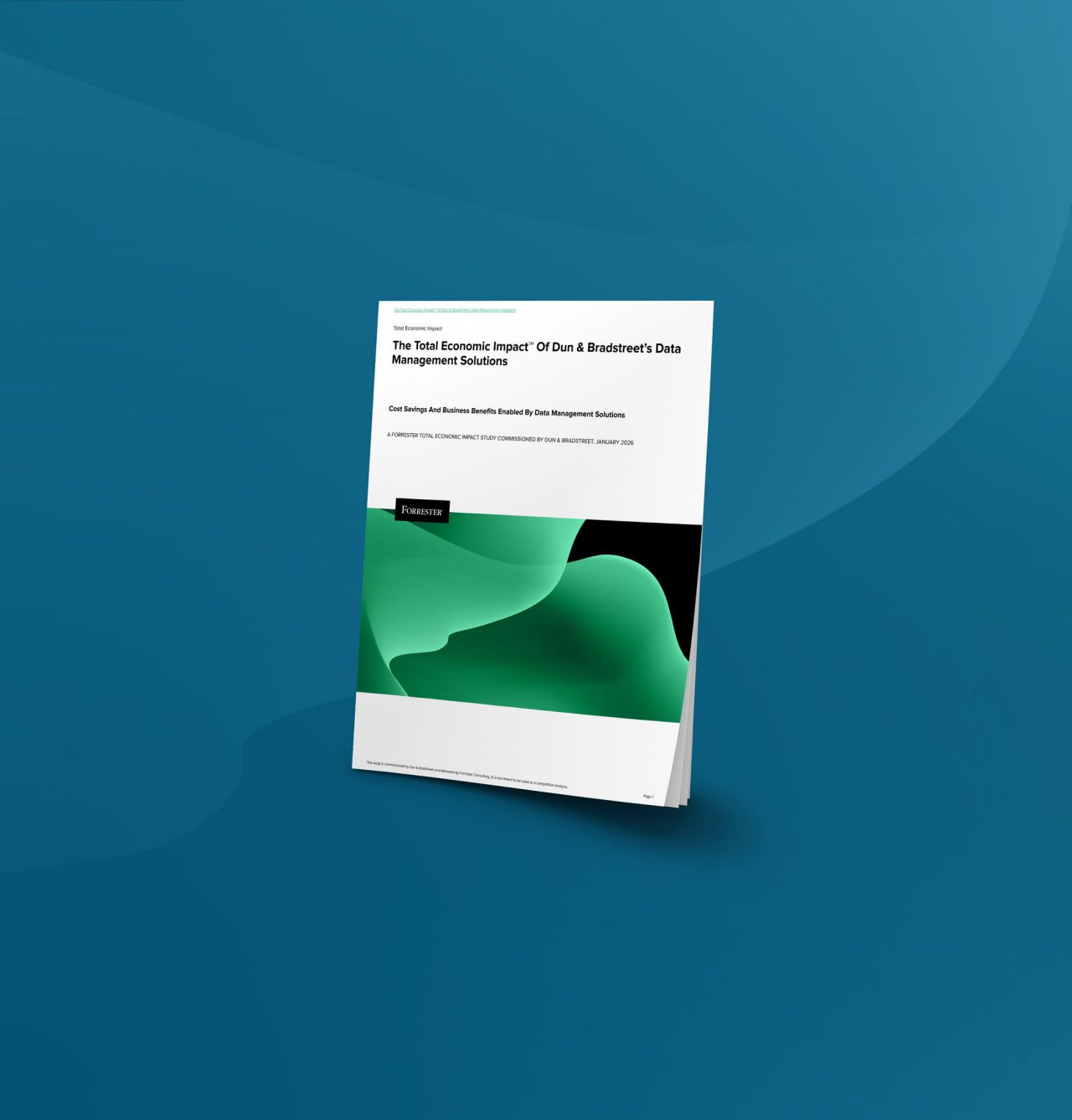
The Total Economic Impact™ of Dun & Bradstreet’s Data Management Solutions
Organizations that invest in clean, connected data improve operational efficiency, unlock growth opportunities, and decrease risk exposure. Forrester’s Total Economic Impact™ (TEI) study revealed how Dun & Bradstreet’s master data management approach delivered measurable business value, including $11.8M Net Present Value (NPV), 208% ROI, and payback in just over a year. Access the full study to see what else was revealed.

Build a Trusted Foundation for Enterprise Data Management
Access trusted, actionable data — delivered in the way you need it — to accelerate performance across your organization.

Master Data Solutions
Make confident, informed decisions that accelerate growth and drive performance—rooted in a foundation of trusted data and insights.

D&B Connect
Drive efficiency and accelerate business growth with trusted, actionable business data and insights delivered across your organization.
The information provided in articles are suggestions only and based on best practices. Dun & Bradstreet is not liable for the outcome or results of specific programs or tactics undertaken based on your use of the information. Please contact an attorney or financial/tax professional if you are in need of legal or financial/tax advice.
There are multiple Contact Forms popups in the page. Only one Contact Form popup could be present on single page. Please reconfigure Contact Forms and refresh the page.